
Point of Rocks Siesta Key: Snorkeling Guide to Crescent Beach
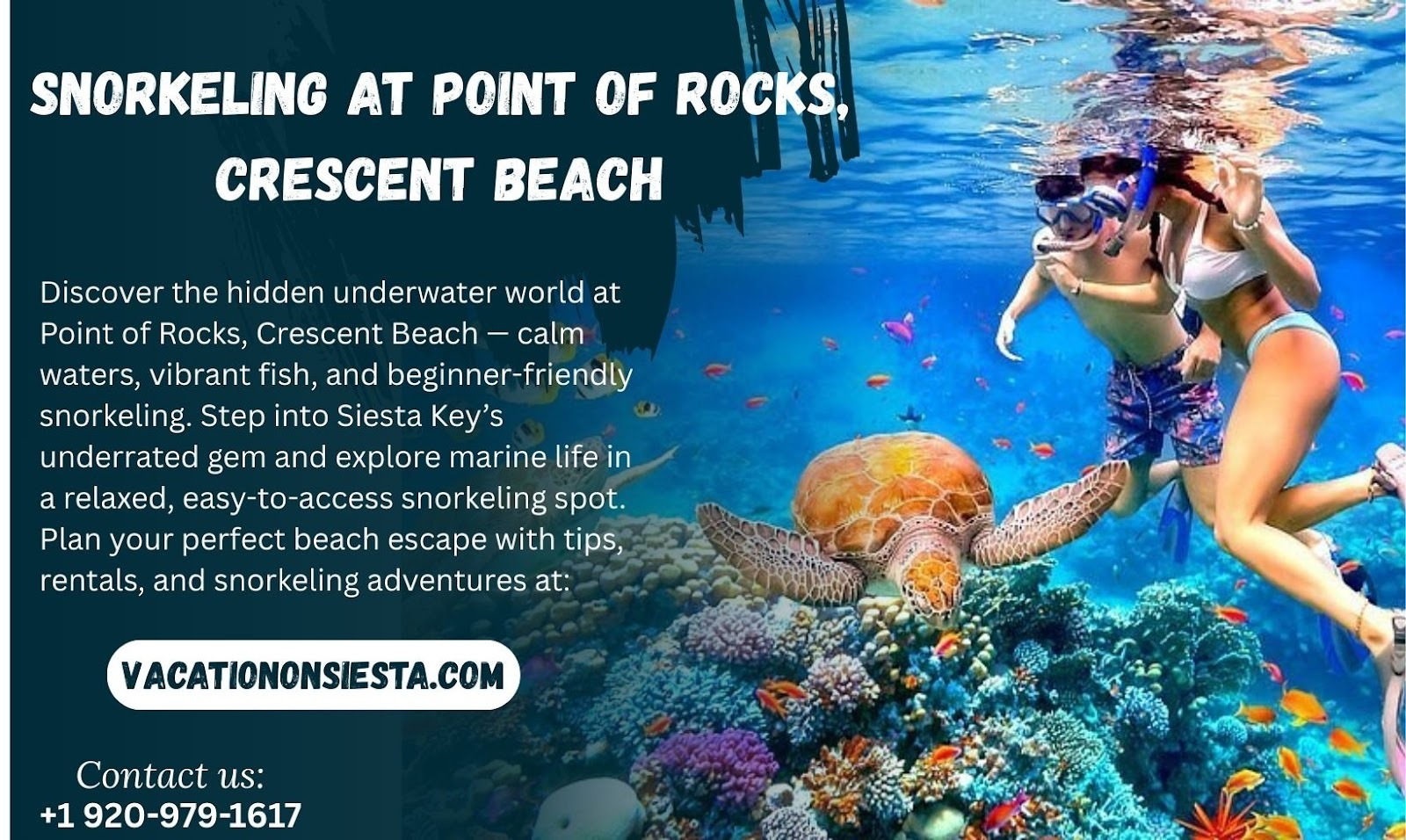
Point of Rocks Siesta Key is a limestone rock formation at the southern tip of Crescent Beach, and it is the spot most visitors mean when they talk about Siesta Key snorkeling from shore. The water usually stays just a couple of feet deep, so you can wade in from the sand and float over the ledges to see fish, crabs, and sea stars without a boat. For the best experience, go at low tide on a calm day, park early at Beach Access 12, and wear water shoes.
If you have seen it listed as Point of Rocks Sarasota, it is the same place, since Siesta Key is a barrier island in Sarasota County just off the city of Sarasota. This guide covers where the rocks are, how to get there, when to go, what you can see, and the safety and shelling rules to know before you get in the water.
Where Is Point of Rocks on Siesta Key?
Point of Rocks sits at the southern tip of Crescent Beach on the Gulf side of Siesta Key, according to Sarasota Lifestyle. You can reach it on foot by walking south along the shoreline from the main Siesta Beach, which makes for a long but scenic beach walk.
The limestone rocks extend both above and below the water line, as Must Do Visitor Guides describes. Those ledges are what make the spot different from the open sandy shoreline on the rest of the island, because they give fish and crabs somewhere to shelter.
How Do You Get to Point of Rocks and Where Do You Park?
Beach Access 12 is the closest public access with parking, and it has only about 20 spaces, according to Must Do Visitor Guides. The lot fills quickly, so arrive early. From the parking area, plan on roughly a 10 minute walk along the sand to reach the rocks.
Beach Access 13 is open to pedestrians, which helps if you are being dropped off, biking, or walking in from nearby. Sarasota Lifestyle also points to Access 12 as the main public entry point for Crescent Beach.
Without a car, the free Siesta Key Trolley is the easiest option. Visit Sarasota reports that the 77 Islander Siesta route, operated by Sarasota County Breeze Transit, runs from downtown Sarasota to Siesta Key Village, Siesta Beach, South Village, and Turtle Beach, and Must Do notes that the trolley serves the Point of Rocks area. If the Access 12 lot is full, our guide to the best beaches in Siesta Key covers other beaches and access options on the island.
When Is the Best Time to Snorkel Point of Rocks?
Low tide offers the best visibility at Point of Rocks, and visibility ranges from about six feet to much more depending on daily water conditions, according to Must Do Visitor Guides. Check a local tide chart the night before and plan your swim around the low.
Wind matters as much as the tide. Choppy water stirs up sand and cuts visibility, so a calm, glassy day is worth waiting for if your schedule allows it.
For water temperature, Must Do reports that June through September brings the warmest water, spring and fall average about 72°F, and winter swimmers usually want a wetsuit. During red tide events, Mote Marine Laboratory’s Beach Conditions Reporting System tracks dead fish, respiratory irritation, water color, and wind direction at local beaches, so it is worth a quick check before you go.
What Marine Life Can You See at Point of Rocks?
Snorkelers at Point of Rocks regularly spot snook, snapper, sheepshead, and nurse sharks, along with colorful coral, crabs, and algae, according to Must Do Visitor Guides. Many visitors also see dolphins and manatees nearby.
Look closely in the cracks and sandy patches too. Sarasota Lifestyle reports finding a small octopus, a sea star, a pincushion urchin, a horseshoe crab, and a Sally Lightfoot crab at the rocks, plus shells such as the Florida spiny jewel box, calico scallop, sand dollars, and fighting conchs.
Sightings change with the season, tide, and water clarity, so every visit looks a little different. Move slowly, keep your hands to yourself, and let the animals come into view rather than chasing them.
Is Point of Rocks Safe for Beginners and Kids?
Point of Rocks works well for beginners because the water is calm and usually stays just a couple of feet deep, according to Must Do. Kids who already swim comfortably can enjoy it with close adult supervision.
There is no lifeguard at Point of Rocks. The Sarasota County Fire Department lists lifeguard coverage at six beaches, Lido, Siesta, Nokomis, North Jetty, Venice, and Manasota, and Crescent Beach is not one of them. Snorkel with a buddy and stay within your comfort zone.
Wear water shoes, since the entry has crushed shells and smaller rocks underfoot. Must Do also recommends bringing a dive flag if you swim beyond the shallows, because kayakers and paddleboarders share these waters. Florida law requires divers to display a divers down flag or buoy, at least 12 by 12 inches when shown from the water, and boats must make a reasonable effort to stay 300 feet away in open water, according to the Florida Fish and Wildlife Conservation Commission.
Can You Take Shells or Sea Life From Point of Rocks?
Empty shells are generally fine to collect, but live ones are a different story. A Florida recreational saltwater fishing license is required to harvest a sea shell containing a living organism, even when harvesting from shore, according to the Florida Fish and Wildlife Conservation Commission.
FWC also bans all harvest of Bahama starfish and prohibits possession of living queen conch. The simplest rule at Point of Rocks is to look, photograph, and leave every living sea star, sand dollar, urchin, and shell where you found it.
7 Tips for Snorkeling Point of Rocks Siesta Key
- Arrive early. Beach Access 12 has only about 20 spaces and fills fast.
- Time it to low tide. Low tide brings the clearest water over the ledges.
- Pick a calm day. Wind and chop stir up sand and reduce visibility.
- Wear water shoes. Crushed shells and small rocks line the entry.
- Carry a dive flag. Use one if you swim past the shallows where kayaks and paddleboards pass.
- Check beach conditions. Look at Mote’s reporting system for red tide updates before you leave.
- Leave live animals alone. Taking shells with living organisms requires a fishing license.
What Else Can You Do Near Point of Rocks?
Point of Rocks pairs well with other time on the water. Our Siesta Key kayaking guide covers paddling the calmer bay side, and our Siesta Key water sports guide covers jet skis, parasailing, and boat rentals.
Crescent Beach faces west over the Gulf, so staying for the evening is easy. Our Siesta Key sunset guide lists the best places to watch the sun go down after a morning of snorkeling.
Plan Your Siesta Key Snorkeling Trip
Point of Rocks Siesta Key rewards visitors who plan ahead: go early, go at low tide, and go on a calm day. Pack a mask, snorkel, fins, and water shoes, and you have everything you need for one of the most memorable free outings on the island.
Our rentals sit near Siesta Key Village, Southside Village, Beach Access 5 and 11, and Stickney Point, so you are a short drive or trolley ride from Crescent Beach. Browse our Siesta Key vacation home rentals, check availability, or contact us to start planning your stay.
Frequently Asked Questions About Point of Rocks Siesta Key
Where is Point of Rocks on Siesta Key?
Point of Rocks is a limestone rock formation at the southern tip of Crescent Beach on the Gulf side of Siesta Key, in Sarasota County, Florida.
Where do you park for Point of Rocks?
Beach Access 12 is the closest public parking, with only about 20 spaces, and it is roughly a 10 minute walk along the sand to the rocks. Beach Access 13 is open to pedestrians, and the free Siesta Key Trolley serves the area.
Is there a lifeguard at Point of Rocks?
No. Sarasota County lifeguards cover Lido, Siesta, Nokomis, North Jetty, Venice, and Manasota beaches. Crescent Beach and Point of Rocks are not lifeguarded, so snorkel with a buddy.
When is the best time to snorkel at Point of Rocks?
Low tide on a calm day gives the best visibility. June through September brings the warmest water, while winter snorkelers usually want a wetsuit.
Can you take shells from Point of Rocks?
Empty shells are generally allowed, but Florida requires a recreational saltwater fishing license to harvest any shell containing a living organism, even from shore. Leave live sea stars, sand dollars, and urchins in the water.